Choosing the Right Reverse Osmosis System for Your Water Needs
Reverse osmosis has become a practical solution for homes, businesses, and industrial facilities that need more control over water quality. But choosing an RO system isn’t…
Reverse osmosis has become a practical solution for homes, businesses, and industrial facilities that need more control over water quality. But choosing an RO system isn’t simply a matter of picking the biggest unit or the one with the longest list of features.
Water demand, available space, incoming water quality, pressure, maintenance requirements, and operating costs all matter.
A small office has very different needs from a food-processing facility. A busy restaurant may need consistent treated water throughout the day, while a household might only need purified water for drinking and cooking.
The right system is the one that fits the actual situation—not the one that looks most impressive on paper.
What Reverse Osmosis Actually Does
Reverse osmosis uses pressure to push water through a semipermeable membrane. The membrane allows water molecules to pass while reducing many dissolved substances and other unwanted materials from the treated-water stream.
RO is particularly useful when conventional filtration isn’t enough.
However, it isn’t a universal solution for every water problem. Sediment, chlorine, hardness, iron, and other characteristics can affect membrane performance, which is why pretreatment is often important.
Before installing an RO system, it’s worth understanding the incoming water. A water test can reveal what needs to be addressed and help determine which treatment stages make sense.
Matching Capacity to Water Demand
One of the first questions to ask is simple: how much treated water do you actually need?
A small business may use a few hundred gallons per day, while a manufacturing facility can require significantly more. Even within the same facility, water demand can rise sharply during peak operating hours.
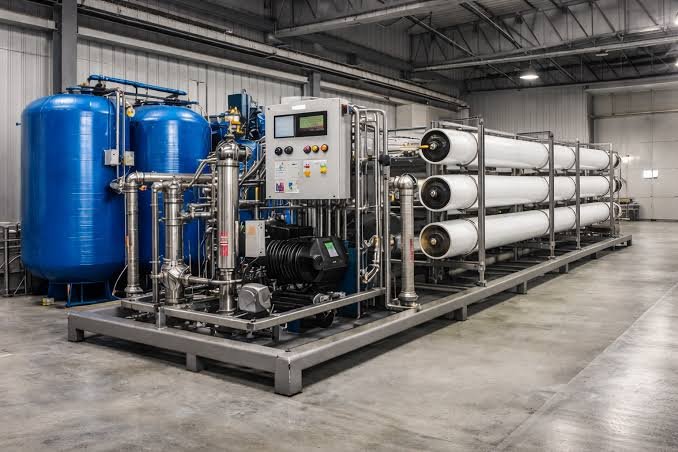
This is where high-capacity RO systems can make sense for larger applications.
These systems are designed to produce greater volumes of treated water and may be configured with larger membranes, pumps, storage tanks, and pretreatment equipment.
But bigger isn’t always better.
If a facility doesn’t require high output, an oversized system can increase installation and operating costs without providing a meaningful advantage. Capacity should be based on actual demand, including reasonable peak usage.
When a Compact RO System Makes More Sense
Not every installation has room for a large treatment system.
Small restaurants, offices, laboratories, retail businesses, and other facilities may have limited mechanical or utility space. In these situations, compact RO units can provide a practical alternative.
Their smaller footprint can make installation easier, particularly when space is already crowded with plumbing, electrical equipment, storage, or other utilities.
Compact doesn’t necessarily mean ineffective. It simply means the system is designed around a lower capacity or a more space-conscious application.
The important thing is to make sure the unit can handle the required flow and operating schedule. A compact system that is constantly pushed beyond its intended capacity won’t be a smart investment.
Why Pretreatment Matters
RO membranes work best when the incoming water has been properly prepared.
Sediment can clog or foul membranes. Hardness can contribute to scaling. Chlorine can damage certain membrane materials.
Depending on the water conditions, pretreatment may include sediment filtration, activated carbon, softening, iron reduction, or other technologies.
This might sound like adding more equipment, but there’s a reason for it. Protecting the RO membrane can improve consistency and potentially extend its useful life.
The right pretreatment setup should always be based on the water analysis and the membrane manufacturer’s requirements.
Energy Efficiency Is Becoming More Important
Reverse osmosis requires pressure, and pressure requires energy.
That makes energy use an important consideration, particularly for businesses that operate RO equipment for long periods.
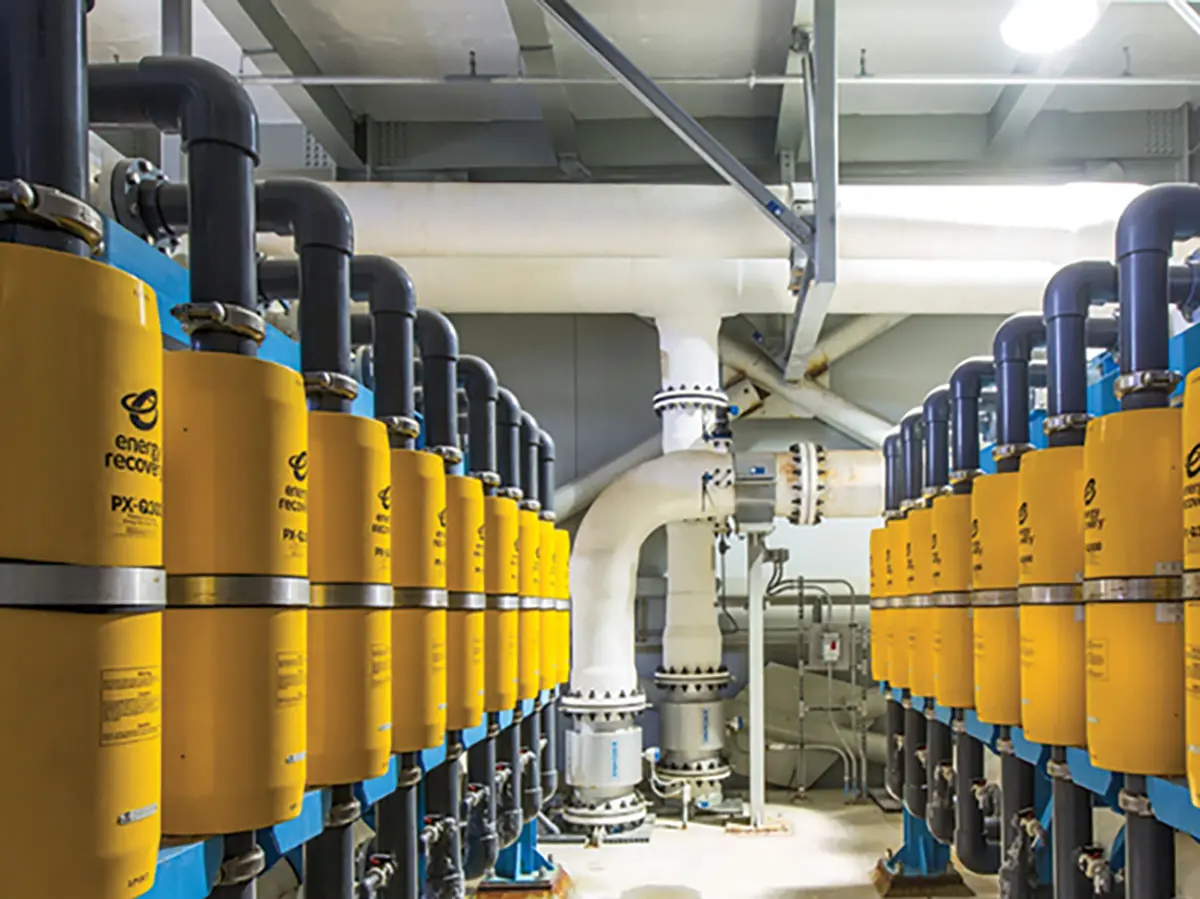
Modern energy-efficient models may incorporate improved pumps, membrane technology, controls, and recovery strategies designed to reduce unnecessary energy consumption.
Still, energy performance varies by application.
A system operating with poor pretreatment, unsuitable pressure, or an aging membrane may perform very differently from a properly maintained system.
For that reason, energy efficiency should be evaluated as part of the entire system rather than based on one specification.
Understanding Recovery and Wastewater
One part of RO that sometimes surprises new users is that not all incoming water becomes treated water.
A portion of the water is used as concentrate or reject, carrying separated substances away from the membrane.
The percentage varies depending on system design, water quality, membrane configuration, and operating conditions.
Commercial and industrial users should think about how this wastewater will be handled before installation.
Improving recovery can sometimes reduce water waste, but pushing recovery too far can increase scaling or fouling risks. There’s a balance to maintain.
A properly designed system finds that balance for the specific application.
Storage Can Help With Peak Demand
An RO system doesn’t always need to produce water at the exact moment it’s being used.
Storage tanks can provide a buffer between production and consumption.
For example, a restaurant might have periods of heavy water use followed by quieter periods. A storage tank can allow the RO system to produce water steadily while the business draws from stored treated water during peak demand.
This approach can sometimes make system sizing more practical.
However, storage tanks must also be properly sized and maintained. Water should not simply sit unused for long periods without appropriate management.
Maintenance Makes a Big Difference
RO systems require regular maintenance.
Pre-filters need replacement. Carbon cartridges eventually become exhausted. Membranes may require cleaning and eventually replacement. Pumps and controls should also be inspected.
Ignoring maintenance can lead to declining water production and changing water quality.
A good maintenance plan should include filter-change intervals, membrane monitoring, pressure checks, sanitation where appropriate, and periodic water testing.
It’s worth keeping records, too. If system performance changes suddenly, maintenance history can help identify what happened.
Don’t Choose Based on Price Alone
The initial purchase price is only one part of the cost.
Businesses should consider installation, electricity, replacement filters, membrane replacement, cleaning, wastewater handling, service, and potential downtime.
A cheaper system may become expensive if it requires frequent maintenance or doesn’t produce enough water for the application.
Likewise, a premium system may not make financial sense for a small operation that doesn’t need its extra capacity.
Look at the total cost of ownership instead.
Professional Sizing Can Prevent Expensive Mistakes
Sizing an RO system involves more than calculating daily water consumption.
Flow rate, peak demand, feed-water pressure, temperature, water chemistry, desired recovery, pretreatment, and storage requirements can all influence the final design.
This is particularly important for commercial and industrial installations.
A professional assessment can help ensure that the system isn’t unnecessarily large, too small for the application, or missing important pretreatment components.
Good planning at the beginning is usually cheaper than redesigning a system later.
Finding the Right Balance
The best RO system isn’t necessarily the largest, smallest, newest, or cheapest option.
It’s the one that matches the water and the way that water is used.
A high-volume facility may benefit from a high-capacity configuration. A space-limited business might need a compact design. A facility concerned about long operating hours may place greater emphasis on energy performance.
Start with water testing and a clear understanding of demand. From there, consider capacity, pretreatment, recovery, maintenance, energy consumption, and total cost.
Reverse osmosis can be an extremely useful water-treatment technology when it’s properly designed and maintained. The trick is not to buy more system than you need—or less than you require.
When the equipment fits the application, water treatment becomes much less complicated. It simply works quietly in the background, providing reliable treated water while the people running the business get on with everything else.