There’s a certain romance to fashion design—the late-night sketches, the fabric swatches scattered across a table, the instinct that tells a designer, “This feels right.” For a long time, creativity in fashion was seen as deeply human, almost untouchable by machines.
And yet, here we are.
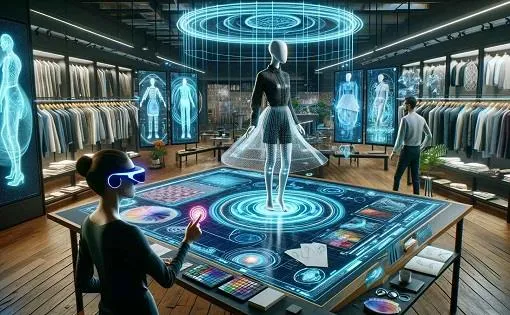
AI is now generating clothing designs. Not just basic patterns, but surprisingly complex, trend-aware, sometimes even beautiful pieces. It’s not replacing designers outright—but it’s definitely stepping into the room.
From Mood Boards to Machine Learning
Traditionally, fashion design starts with inspiration. A designer builds a mood board, pulls references from art, culture, maybe even a random street style moment, and slowly shapes an idea into something wearable.
AI approaches it differently.
It learns from massive datasets—past collections, current trends, consumer preferences, even social media aesthetics. Feed it the right inputs, and it can generate hundreds of design variations in seconds.
At first glance, it feels almost unfair. What takes a human days—or weeks—can be done by a system in minutes.
But speed isn’t the whole story.
A Tool, Not a Replacement
There’s a temptation to frame this as a battle: humans vs. machines. But that’s not quite accurate.
Most brands using AI aren’t firing their designers. They’re augmenting them.
Imagine a designer stuck on a concept. Instead of starting from scratch, they use AI to explore variations—different cuts, patterns, color combinations. It’s like having a brainstorming partner that never runs out of ideas.
Some designers love it. Others are… cautious.
And honestly, both reactions make sense.
So What Does This Mean for Brands?
This is where things get interesting.
Brands are always under pressure—to launch faster, predict trends better, reduce costs, and still stay creative. AI fits neatly into that equation.
Which brings up a question many in the industry are starting to ask: AI-generated fashion designs ka real-world impact brands par kya hai?
The answer isn’t black and white.
On one hand, AI helps brands speed up design cycles. Collections can be conceptualized and tested faster. There’s less guesswork, more data-backed decisions.
On the other hand, there’s a risk of sameness. If everyone is using similar datasets and algorithms, designs can start to feel… familiar. Predictable, even.
And fashion, at its core, thrives on uniqueness.
The Fast Fashion Connection
AI is particularly attractive to fast fashion brands.
Why? Because it aligns perfectly with their model—quick turnaround, trend-driven production, and constant newness.
AI can scan social media, identify emerging trends, and generate designs that match current demand almost instantly. It reduces the gap between “trend spotted” and “product available.”
But there’s a flip side.
Faster production can mean more consumption. More waste. And in an industry already criticized for its environmental impact, that’s not a small concern.
Creativity vs. Data: An Ongoing Debate
One of the biggest questions around AI in fashion is philosophical.
Can creativity be reduced to patterns and data?
AI can analyze what’s popular. It can remix styles, predict what might sell. But can it create something truly original—something that challenges norms, starts a movement, or captures a cultural moment?
That’s still up for debate.
Human designers bring context, emotion, lived experience. They don’t just follow trends—they sometimes break them.
AI, at least for now, tends to follow.
Opportunities for Smaller Brands
Interestingly, AI isn’t just benefiting big players.
Smaller brands and independent designers are also tapping into it. Tools that were once expensive and complex are becoming more accessible.
A solo designer can now experiment with multiple concepts without needing a large team. They can test ideas digitally before investing in production.
In a way, AI is leveling the playing field—at least a little.
The Customer Experience Is Changing Too
It’s not just about design.
AI is also influencing how customers interact with fashion. Personalized recommendations, virtual try-ons, even custom-generated designs based on individual preferences—it’s all part of the same ecosystem.
Imagine ordering a piece of clothing that’s designed specifically for you, based on your style history. It sounds futuristic, but it’s already starting to happen.
The Human Touch Still Matters
Despite all this innovation, something remains unchanged.
People still connect with stories. With designers who have a voice, a perspective, a point of view.
A dress isn’t just fabric—it’s an idea, an expression. And while AI can assist in creating it, the meaning behind it often comes from a human place.
That’s not something easily replicated.
Final Thoughts
AI-generated fashion design isn’t a passing trend. It’s part of a larger shift in how industries operate—faster, smarter, more data-driven.
But fashion isn’t just an industry. It’s culture. It’s identity. It’s personal.
So maybe the future isn’t about choosing between AI and human creativity. Maybe it’s about finding a balance—where technology supports imagination, rather than replacing it.
Because in the end, the best designs don’t just look good.
They feel like something.