My friend Tejas moved from Sion to Badlapur on a Sunday in early August, and when I asked how it went he said, “I have never been so wet in my life, and I once fell into a pond.” The rain started at six. The tempo got stuck behind a broken-down bus near Kurla for fifty minutes. And his grandfather’s old gramophone, a boxy wooden thing with a brass horn and a crank that still turns, rode on his lap in a local train, wrapped in a raincoat and clutched like a baby. Two commuters asked if it still played. It did. He played one scratchy record on the platform at Ambernath. A small crowd formed. Nobody complained.
That’s moving in Mumbai. Distances look short on a map, then swallow the whole day. Buildings are old, lifts are barely wider than a wardrobe, and every society has a secretary with strong views on timing. I’ve moved twice here and helped on plenty more, so here’s what I’d tell you over a cutting chai, standing up, because nobody sits in this city.
Ask the building before you ask anyone else
Plenty of people lock in a date and learn the society’s rules afterward. Try it the other way around. Many Mumbai housing societies want a no-objection letter, some charge a refundable deposit, and quite a few allow the goods lift only in a narrow window. Some refuse Sunday move-ins, and festival weeks can be their own kind of trouble. Call the secretary or the office, and ask about lift size while you’re at it. It decides whether your wardrobe goes up whole, in pieces, or by the staircase with a lot of encouragement.
Then there’s the rain. From June to September, a moving day can go sideways fast. Cartons soak through, roads flood, and a truck stuck near the Andheri subway can eat an entire afternoon. If you can choose October to February, choose it. If you can’t, ask exactly how the crew protects belongings from water. A thin sheet over a mattress is a hope, not a plan.
And start early. Seven in the morning and eleven might as well be different cities.
Choosing who carries your life
Type Packers and Movers Mumbai into a search bar and the results blur into one long promise: lowest price, zero damage, trusted by thousands. Those lines cost nothing to write and can’t be checked from a landing page. What counts is who actually shows up at your door and how they handle your things.
So slow down a little. Ask for a survey, in person if possible, or a proper video call where you walk through every room. Open the cupboards. Show the loft, the balcony storage, the fridge, the staircase. A price given without seeing any of that is basically a guess, and guesses have a habit of growing on moving day.
Get at least three quotes and compare what’s inside them, not just the totals. Is packing material included? Loading and unloading? Stair carry, dismantling, reassembly? Transit insurance? The cheapest number often looks fantastic until the extras arrive in single file.
Keep it all in writing. WhatsApp counts. A promise on a noisy phone call has usually evaporated by evening.
Reviews, with a pinch of salt
I read reviews the way I read restaurant ratings, with one eyebrow raised. “Good service!” says nothing. But “team arrived an hour late, wrapped everything carefully, bill matched the quote” sounds like a real person on a real day. Honest reviews have a little mess in them, and that’s what makes them believable.
Word of mouth is better still. A cousin of mine shifted from Mulund to Ulwe last year, and she mentioned, almost as an aside, that Agarwal Packers and Movers Mumbai had been patient with a cramped staircase and her mother’s fussy collection of steel and brass vessels. Nothing dramatic, just a quiet note that nothing broke. That’s the kind of detail I trust, though I’d say the same about any name: don’t stop at one story. Call them, ask for a survey, read the terms, and watch how they react when you ask awkward questions. If someone gets prickly before you’ve paid, imagine afterward.
What to hand over, what to hold on to
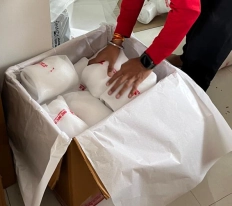
Let the professionals take the heavy, fragile and awkward things. TVs, mirrors, glass tables, crockery, the wardrobe you assembled yourself with a screwdriver and some language. They’ve got the foam, corrugated boards and corner guards, and they’re faster than you’ll ever be.
But keep the irreplaceable stuff close. Documents, laptops, chargers, medicines, jewelry, a bit of cash, school files. Put it all in a bag that travels with you, not on the truck. A colleague once spent two hours on moving night ripping open cartons to find his rent agreement, which had ended up inside a box marked “misc bathroom.” He’s mostly recovered, though he flinches at the word “misc.”
Photograph your furniture and electronics before anything gets wrapped. Five minutes, no more. If something arrives scratched, you’ll have proof instead of a heated debate on the pavement.
Carry less, pay less
Here’s what people realize a little late: you pay for volume, one way or another. Before the survey, walk through your flat with a colder heart than usual. Clothes you haven’t worn since 2020, cables for gadgets that no longer exist, a chair with one suspicious leg, the bookshelf that’s wobbled for years. Sell it, donate it, or let it go.
Mumbai flats don’t forgive clutter anyway. Walking into a smaller space with fewer boxes feels oddly good, a bit like clearing a desk before starting something new.
The day itself, and the hush after
Be there. I know it’s tempting to leave everything to the crew and wander off for a coffee, but someone has to say which box goes in which room, check the inventory and answer the dozen small questions that always pop up. Keep water and a few snacks around. Tip fairly if they’ve earned it.
Then do one last lap of the old place. Every cupboard, the space above the loft, the balcony corner, behind every door. Somebody always forgets something. I once left a bag of steel tiffins in a kitchen cabinet. I assume they’re still there, living their best life.
When the truck finally pulls away and the new flat fills with unfamiliar cartons, there’s often a strange hush. Tired, relieved, a bit sad, all at once. That’s normal. Don’t try to unpack tonight. Make the bed, find the kettle, order something warm. The kitchen can wait until morning.
Moving in this city will never be perfectly smooth, and I won’t pretend otherwise. Something will run late, something will land in the wrong room, and a neighbor will definitely grumble about the lift. But with some planning, honest questions and people who actually listen, it becomes something you get through rather than something that gets through you.
Tejas, by the way, still has the gramophone. It sits on a shelf in his Badlapur living room, and on rainy evenings he plays that one scratchy record. He says it’s the only thing in Mumbai’s suburbs that has never once been delayed.