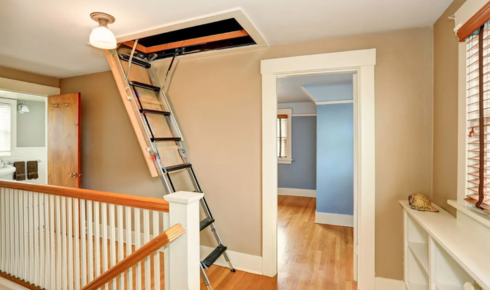
Most people don’t think much about the attic until they need something from it. Then suddenly, there’s the familiar routine — dragging a ladder from the garage, moving furniture out of the way, balancing a box under one arm, and wondering why this whole thing feels harder than it should. It’s one of those small household frustrations that just sits in the background for years.
But the attic is useful space. Really useful, actually. Seasonal décor, luggage, old paperwork, spare bedding, tools, keepsakes — all the things you don’t need every day but don’t want cluttering up the house. The only catch is access. If getting into the attic feels unsafe or annoying, you’ll avoid using it. Simple as that.
Why the Right Ladder Setup Matters
An attic ladder isn’t just a convenience feature. It becomes part of how the home functions. When it opens smoothly, feels secure underfoot, and fits the space properly, the attic suddenly becomes practical instead of awkward.
A sturdy installation is especially important because attic ladders deal with repeated movement and weight. They fold, extend, carry people, and sometimes handle boxes being passed up and down. If the frame is weak or the ladder is poorly aligned, it can creak, shift, or feel unstable. Nobody wants that nervous feeling halfway up a ladder with a storage bin in hand.
Good installation starts with the opening itself. The ceiling space, joists, ladder angle, floor clearance, and surrounding trim all need to work together. A ladder that technically “fits” may still be uncomfortable if the angle is too steep or the landing space below is tight.
Comfort Is About More Than Access
Attics can affect the comfort of the rooms below. Many homeowners don’t realise that a poorly sealed attic opening can let warm or cool air escape. In winter, heat rises toward the attic. In summer, hot attic air can push down into living areas. Either way, a loose or badly fitted access panel can make your HVAC system work harder.
This is where insulation protection becomes part of the conversation. A well-planned attic ladder should not leave gaps that weaken the home’s thermal barrier. The door should close properly, the surrounding area should be sealed, and insulation should be considered during the installation process.
It’s not the most glamorous upgrade, sure. No one walks into a house and says, “Wow, beautiful attic seal.” But you may notice the difference in comfort, especially in rooms directly beneath the attic. Less heat loss, fewer drafts, and a cleaner separation between living space and storage space.
When Standard Ladders Don’t Quite Fit
Every home is a little different. Some ceilings are taller. Some hallways are narrow. Some attic openings are oddly placed. Older homes, especially, don’t always cooperate with off-the-shelf solutions. That’s why choosing the right ladder is not only about price or material.
In many cases, custom attic ladders can solve problems that standard models cannot. They may be designed around unusual ceiling heights, limited floor space, specific load requirements, or a particular opening size. For homeowners who want safer, smoother, and more practical attic access, customization can be worth considering.
A custom option may also help preserve the look of the home. The attic door can be made to sit neatly with the ceiling, match surrounding trim, or open in a way that avoids nearby walls, light fixtures, or furniture. These small details make the ladder feel like it belongs there, rather than something forced into place.
Safety Should Never Be an Afterthought
Attic ladders are used in situations where balance matters. You may be climbing while carrying boxes, stepping down from a dim attic, or using the ladder in a hallway where space is limited. Strong hardware, secure hinges, proper treads, and a comfortable climbing angle all reduce risk.
Lighting helps too. A simple attic light near the entrance can make the space easier to use. So can keeping the area around the ladder clear. It sounds basic, but many accidents happen because people are rushing or working in poor visibility.
Weight limits should also be respected. That includes the person climbing plus anything being carried. And once the attic becomes easier to access, it’s tempting to store everything up there. Still, heavy furniture, overloaded boxes, or items placed on weak attic flooring can create problems.
A Small Upgrade With Long-Term Value
The best home improvements are not always dramatic. Sometimes they’re the ones that make daily life smoother in quiet ways. A good attic ladder gives you easier storage, safer access, better use of space, and fewer little headaches.
It can also help during home maintenance. Contractors, electricians, insulation teams, and pest control professionals often need attic entry. A reliable ladder makes inspections and repairs simpler, which can save time and hassle later.
At the end of the day, an attic ladder is about using the space you already have. No major renovation. No big structural change. Just a smarter way to reach an area that’s been sitting above your head all along.
And once it’s installed properly, you’ll probably wonder why you put up with the old setup for so long.