Water has a funny way of becoming invisible. We use it all day without giving it much thought. It runs through coffee machines, dishwashers, ice makers, bathrooms, kitchens, production equipment, and countless other systems. Then, when something goes wrong, suddenly water quality becomes impossible to ignore.
Maybe there’s mineral buildup around a faucet. Maybe coffee doesn’t taste quite right anymore. Or perhaps an expensive piece of equipment starts needing repairs more often than it used to.
These problems aren’t always caused by water quality, but they can be. That’s why understanding filtration, softening, and purification is worth the effort, particularly for businesses that rely heavily on water.
Good Water Starts With Knowing What You’re Treating
Before choosing any treatment equipment, it’s important to understand the incoming water.
Water can contain minerals, sediment, chlorine, dissolved solids, iron, sulfur, and other substances depending on its source. Municipal water and private well water can have very different characteristics, and even supplies in neighboring areas may not behave exactly the same.
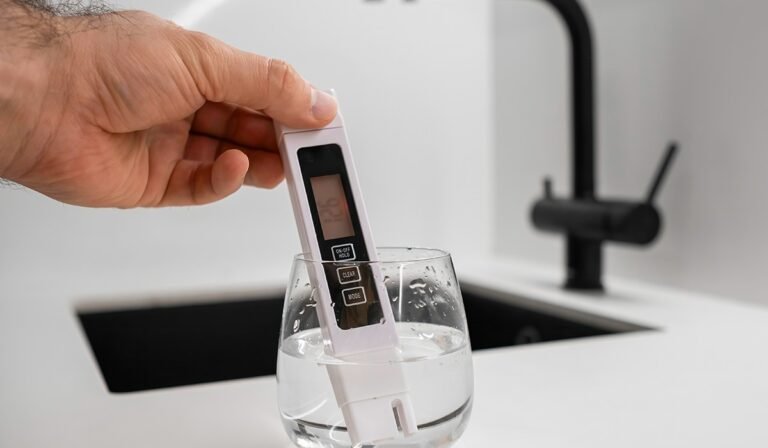
A simple water analysis can reveal what’s actually present.
That information matters because different treatment methods solve different problems. A softener isn’t designed to handle every contaminant. A sediment filter won’t solve dissolved mineral issues. Reverse osmosis has capabilities that ordinary filtration doesn’t.
In short, test first and shop second.
Why Continuous Water Availability Matters
For a commercial operation, having treated water available when it’s needed is a practical necessity.
A restaurant can’t exactly tell customers, “Sorry, the water-treatment system is taking a break today.” Coffee machines, ice makers, dishwashers, and other equipment may need water throughout the day.
In applications where treatment equipment and storage are properly designed, a constant flow of 100% filtered water can provide a dependable supply for operations that need consistently treated water.
Of course, the actual performance depends on system design, source-water conditions, capacity, demand, and maintenance. The phrase “filtered water” can also mean different things depending on the technology being used, so specifications should always be checked carefully.
What Reverse Osmosis Actually Does
Reverse osmosis is one of the better-known advanced water-treatment technologies.
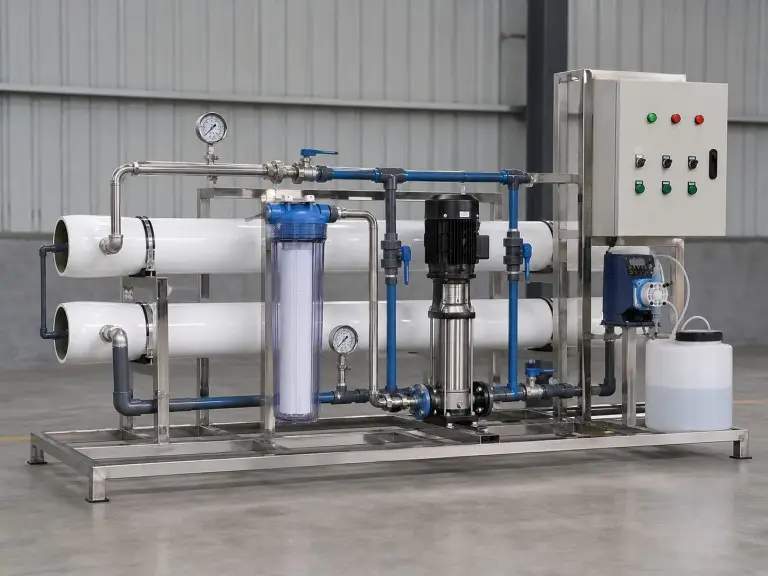
In reverse osmosis, pressure pushes water through a semipermeable membrane. Many dissolved substances are rejected by the membrane while treated water passes through.
RO can be useful when a business or household wants to reduce dissolved solids or other substances that conventional filtration may not address effectively.
It isn’t magic, though.
The incoming water still matters. Pretreatment may be required, and the system needs suitable pressure and regular maintenance. Membranes also have a service life and can become fouled or scaled if the system isn’t properly managed.
A good RO installation is designed as a complete treatment process rather than simply a membrane sitting at the end of a pipe.
Hard Water Creates Its Own Challenges
Hard water is another common reason people investigate water treatment.
Hardness primarily comes from dissolved calcium and magnesium. These minerals aren’t automatically a reason to panic, but they can create plenty of everyday headaches.
You might see spots on glassware, residue around fixtures, or buildup inside appliances. In commercial settings, the issue can become more serious because equipment may process hundreds or thousands of gallons over time.
Water heaters, boilers, dishwashers, coffee equipment, and other systems can all be affected by mineral scale.
The problem often develops gradually, which is why it’s easy to overlook.
How Commercial Water Softeners Can Help
When hardness is the concern, commercial water softeners can be an important part of the solution.
Traditional softening systems use ion exchange to reduce calcium and magnesium in the water. The system size and configuration should be based on water hardness, flow rate, daily consumption, and peak demand.
A small business with modest water usage won’t necessarily need the same equipment as a hotel, restaurant, or manufacturing facility.
Getting the sizing right is important. An undersized system can struggle during busy periods, while an unnecessarily large system can increase upfront and operating costs.
Protecting Expensive Equipment
Water-using equipment represents a serious investment for many businesses.
Consider a restaurant with commercial coffee machines, ice makers, steam ovens, dishwashers, and water heaters. If scale accumulates inside those machines, maintenance can become more frequent.
Water treatment can help manage some of the water-quality conditions that contribute to these problems.
It doesn’t mean equipment will never fail. Motors wear out. Pumps break. Electrical components have their own problems. But reducing avoidable water-related stress can be a sensible part of preventive maintenance.
Nobody wants a coffee machine to quit during the morning rush. That’s the sort of problem that always seems to happen when the line is longest.
Water Quality Can Affect Taste
Not every water problem involves equipment.
Taste and odor matter, especially in food and beverage businesses.
Water containing noticeable chlorine, certain minerals, or other substances may affect coffee, tea, ice, beverages, and food preparation.
For a café, consistency is particularly important. Customers expect their favorite drink to taste roughly the same each time they order it.
Water is often the forgotten ingredient, even though it can make up most of the finished beverage.
That’s one reason many professional operations pay close attention to their incoming water quality.
Filtration Isn’t One Single Technology
The word “filtration” can make the process sound simpler than it actually is.
Different systems use different methods and media. Sediment filters can capture particles. Activated carbon can help reduce certain chlorine and taste concerns. Softeners address hardness. RO membranes target many dissolved substances.
There are also specialized treatment technologies for applications with more specific requirements.
The right combination depends on the water.
More stages don’t necessarily mean better water. A treatment system should have a purpose behind each stage.
If someone can’t explain why a particular filter or treatment component is necessary, it’s reasonable to ask more questions before buying it.
Commercial Systems Need Proper Sizing
One of the easiest mistakes to make is choosing equipment based only on average water consumption.
Commercial facilities often have periods of intense demand.
A restaurant may use large amounts of water during lunch and dinner. A hotel can experience simultaneous demand from multiple rooms. A manufacturing facility may need water continuously during production.
The treatment system needs to accommodate those real-world conditions.
Flow rate, peak demand, storage capacity, operating hours, and future expansion should all be considered when designing the system.
A little planning at the beginning can prevent frustrating limitations later.
Pretreatment Can Improve Overall Performance
Advanced treatment systems often work better when the water is prepared before reaching the main treatment stage.
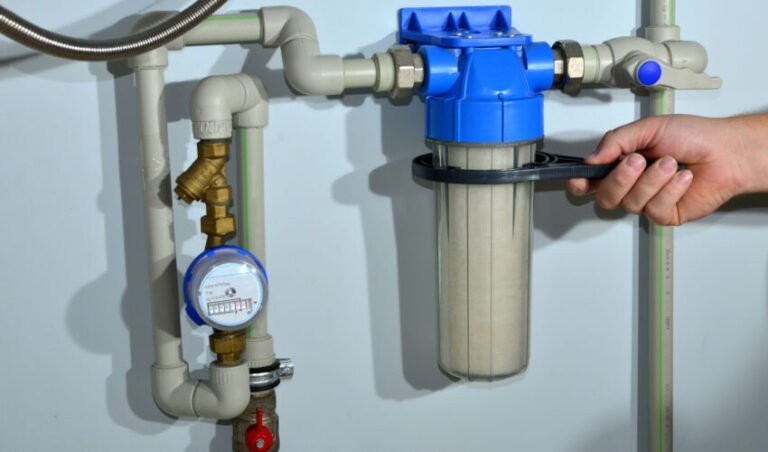
Sediment filtration can protect downstream equipment from particles. Carbon treatment may reduce substances that could affect certain membranes. Softening can help control hardness before water enters equipment vulnerable to scaling.
The exact configuration depends on the source water and desired result.
Think of it as building a team. Each treatment stage has a particular job, and the stages work together rather than competing with each other.
Storage and Distribution Matter Too
Producing treated water is only part of the equation.
If treated water is stored in a tank or transported through plumbing, those components need to be appropriate for the application.
Poorly maintained storage tanks or distribution systems can undermine the quality achieved during treatment.
For sensitive commercial applications, it makes sense to look at the complete water pathway, from the source all the way to the final point of use.
Maintenance Isn’t Optional
Every treatment system needs maintenance.
Filters eventually need replacement. Softening systems need regeneration and servicing. RO membranes require monitoring and eventual cleaning or replacement. Pumps, valves, tanks, and controls can also require attention.
Skipping maintenance may not cause an immediate problem, which makes it tempting to put it off.
That’s usually when small issues become bigger ones.
A written maintenance schedule can make things much easier, particularly for commercial facilities where several pieces of equipment depend on the same water-treatment system.
Look at Long-Term Costs
When comparing water-treatment equipment, don’t focus entirely on the installation price.
Consider filter replacements, treatment media, electricity, water consumption, service visits, maintenance, and potential downtime.
A system that costs slightly more upfront may be more practical if it fits the application better and is easier to maintain.
On the other hand, buying an unnecessarily complicated system can create costs without adding much value.
The goal is not to spend the most. It’s to get the right performance for the money.
The Bottom Line
Reliable water treatment is about much more than having water that looks clean.
It can support better-tasting beverages, protect water-using equipment, reduce certain scale-related problems, and provide greater consistency for businesses that depend on water every day.
The smartest approach is fairly simple: test the water, understand the application, determine actual demand, and choose treatment technology accordingly.
Whether the answer involves filtration, softening, reverse osmosis, or several technologies working together, good system design makes all the difference.
When treated water is available consistently and the equipment behind it is properly maintained, water stops being another thing to worry about. It simply does its job — quietly, reliably, and in the background where it belongs.