There’s something interesting about how technology choices are made. On paper, they look like clean comparisons—this vs that, faster vs cheaper, scalable vs efficient. But in real life, it’s rarely that simple.
Take edge computing and cloud computing, for example. For years, cloud has been the default answer. Need storage? Cloud. Need processing power? Cloud again. It became almost invisible in how naturally we relied on it.
And now, edge computing is stepping in—not to replace it, but to question the way things have been done.
What’s the Difference, Really?
Let’s not get too technical here.
Cloud computing is centralized. Data gets sent to large data centers—sometimes far away—where it’s processed and stored. It’s powerful, scalable, and relatively easy to manage.
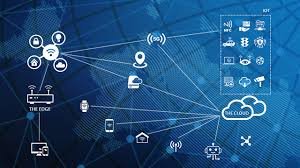
Edge computing, on the other hand, brings processing closer to where the data is generated. Think of devices or local servers handling tasks in real time, without always needing to “check in” with a distant cloud.
It’s less about replacing the cloud and more about reducing the distance between action and response.
Why This Debate Matters in India
India isn’t just adopting technology—it’s adapting it.
From smart cities and IoT devices to digital payments and connected vehicles, the volume of data being generated is massive. And more importantly, it’s happening everywhere—not just in big cities.
That’s where latency (delay in data processing) becomes important. In some cases, even a few milliseconds matter.
Which brings up a very practical question: Edge computing vs cloud computing – India me future kis ka strong hai?
The answer, like most things in tech, isn’t a straight line.
Where Cloud Still Dominates
Cloud computing isn’t going anywhere.
It remains the backbone for many applications—data storage, large-scale analytics, machine learning, enterprise software. Its ability to scale quickly and handle massive workloads makes it indispensable.
For startups and businesses, cloud also reduces the need for heavy upfront infrastructure. You pay for what you use, which is a big advantage in a cost-sensitive market like India.
In short, cloud is reliable. Familiar. And deeply embedded in how systems are built today.
The Edge Advantage: Speed and Real-Time Response
But then there are scenarios where cloud alone isn’t enough.
Imagine a self-driving car needing to make a split-second decision. Or a factory machine detecting a fault in real time. Or even a smart traffic system adjusting signals based on live conditions.
Sending data to a distant server and waiting for a response? That delay could matter.
This is where edge computing shines.
By processing data locally, it reduces latency and allows for faster decision-making. It also reduces the load on central servers, which can improve overall efficiency.
India’s Infrastructure Reality
Here’s something we can’t ignore—India’s infrastructure is uneven.
Urban areas may have strong connectivity, but rural and semi-urban regions often face inconsistent internet speeds. In such environments, relying entirely on cloud connectivity can be limiting.
Edge computing offers a workaround.
By enabling local processing, systems can function even with limited or unstable connectivity. That’s a big deal for applications in agriculture, healthcare, and rural development.
Cost vs Complexity
Of course, nothing comes without trade-offs.
Cloud computing is relatively simpler to deploy and manage. Edge computing, on the other hand, requires distributed infrastructure—multiple nodes, devices, and maintenance points.
That can increase complexity and, in some cases, cost.
So businesses need to evaluate carefully. It’s not just about performance—it’s about practicality.
The Hybrid Future Is Already Here
Interestingly, most organizations aren’t choosing one over the other.
They’re combining both.
Sensitive, real-time tasks are handled at the edge. Larger data processing and storage happen in the cloud. It’s a layered approach that plays to the strengths of each system.
This hybrid model feels less like a compromise and more like a natural evolution.
The Role of 5G and IoT
As technologies like 5G roll out and IoT devices become more common, the need for edge computing will likely grow.
Faster networks reduce latency, yes—but they also enable more devices to connect and generate data. Managing that data efficiently becomes crucial.
Edge computing helps filter, process, and prioritize information before sending it to the cloud.
It’s like having a smart gatekeeper instead of a constant data flood.
Final Thoughts
The debate between edge and cloud computing isn’t really about choosing a winner.
It’s about understanding context.
In India, where diversity in infrastructure, use cases, and user needs is vast, flexibility matters more than rigid solutions. Some applications will lean heavily on the cloud. Others will depend on edge capabilities.
And many will sit somewhere in between.
So maybe the future isn’t edge vs cloud.
Maybe it’s edge with cloud—working together, quietly powering the systems we rely on every day.