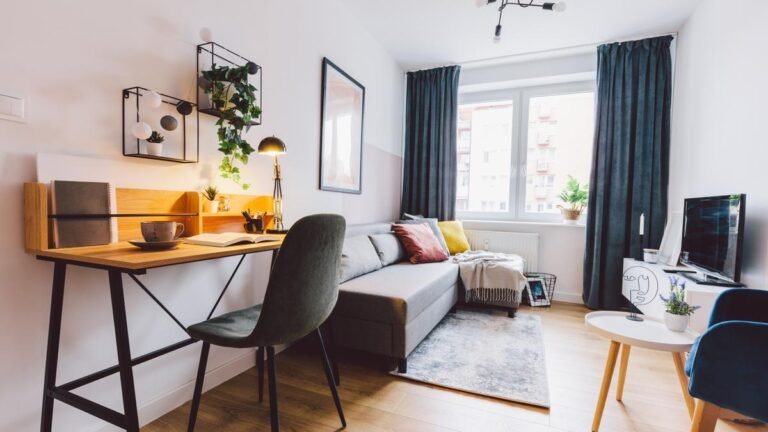
There’s a certain phase in life—maybe your early job years, maybe right after college—where “home” becomes a flexible idea. Not quite permanent, not entirely temporary either. Just a place that works for now.
In big cities like Bangalore or Mumbai, co-living spaces have already found their footing. But something interesting is happening beyond those metros. Tier-2 cities—places like Jaipur, Indore, Kochi, Coimbatore—are slowly stepping into this trend.
Not loudly. Not with massive hype. But steadily.
What Co-Living Really Means (Beyond the Buzzword)
At its simplest, co-living is shared living with a twist.
You get a private room (or sometimes shared), but common areas—kitchen, lounge, maybe even a workspace—are shared with other residents. Rent usually includes utilities, Wi-Fi, housekeeping, and sometimes meals.
It’s convenience packaged with community.
For many young professionals and students, that’s appealing. No dealing with brokers, no setting up furniture, no worrying about electricity bills. You just move in and… start living.
Why Tier-2 Cities Are Entering the Picture
For a long time, co-living felt like a metro-city solution. High rents, long commutes, and transient populations made it almost necessary.
But Tier-2 cities are changing.
Job opportunities are expanding. Startups are setting up offices. Remote work has allowed people to return to smaller cities without sacrificing careers. And with that shift, housing expectations are evolving too.
People don’t just want affordability anymore. They want comfort, flexibility, and a bit of lifestyle.
Which naturally brings up the question: Co-living spaces Tier-2 cities me kitne successful ho rahe hain?
Early Signs of Success (With a Few Caveats)
In many Tier-2 cities, co-living spaces are finding their audience—but it’s a slightly different audience than in metros.
Here, residents often include students from nearby colleges, early-stage professionals, and even freelancers who value a plug-and-play lifestyle.
Occupancy rates in well-managed properties are decent. Not always full, but stable enough to show demand. Especially in areas close to IT hubs, universities, or business districts.
But—and this is important—the success isn’t uniform.
Some spaces thrive because they understand local needs. Others struggle because they try to copy-paste metro models without adapting.
Affordability Still Leads the Conversation
Unlike metros, where convenience often outweighs cost, Tier-2 city residents are more price-sensitive.
A co-living space might offer great amenities, but if it’s significantly more expensive than a traditional rental, people hesitate.
So operators have to strike a balance.
They can’t price it like a premium product unless the value is clearly visible. At the same time, they need to maintain quality to justify the concept.
It’s a delicate equation.
Community: A Selling Point… or Just a Bonus?
One of the biggest promises of co-living is community—meeting new people, shared experiences, maybe even friendships.
In metros, where people often feel isolated, this is a strong selling point.
In Tier-2 cities, it’s a bit different.
People here often already have social circles—family, school friends, local networks. So community isn’t always the main draw.
Convenience and flexibility tend to matter more.
That doesn’t mean community is irrelevant. It just plays a quieter role.
The Role of Remote Work
Remote work has quietly reshaped housing choices.
Someone working for a Bangalore-based company can now live in Jaipur or Indore and still earn the same salary. That changes expectations.
They want a comfortable living setup, good internet, maybe a workspace—all without the chaos of a metro.
Co-living spaces fit that need quite well.
They offer a ready-made environment for work and life, without the hassle of setting everything up from scratch.
Challenges That Can’t Be Ignored
Of course, it’s not all smooth.
One major challenge is awareness. Many people in Tier-2 cities still prefer traditional rentals simply because they’re familiar. Co-living, for them, is still a relatively new concept.
There’s also the issue of trust.
People want to know who they’re living with, how secure the space is, and whether the management is reliable. One bad experience can affect perception quickly.
And then there’s scalability. Expanding co-living models across different cities requires understanding local cultures, not just replicating a formula.
A Gradual Shift, Not a Sudden Boom
If you’re expecting a dramatic explosion of co-living spaces across Tier-2 India, you might be disappointed.
This isn’t that kind of trend.
It’s slower. More organic. Spaces are opening, learning, adapting. Some will fail, others will refine the model and grow.
And that’s probably healthier in the long run.
Final Thoughts
Co-living in Tier-2 cities isn’t just about real estate—it’s about changing lifestyles.
People are becoming more mobile, more flexible, more open to trying new ways of living. But they’re also practical. They weigh cost, comfort, and convenience carefully.
So, are co-living spaces successful in these cities?
Yes—but in their own way. Not as a flashy trend, but as a quietly evolving solution.
And maybe that’s exactly how meaningful changes happen—not overnight, but through small, steady shifts that eventually feel… normal.