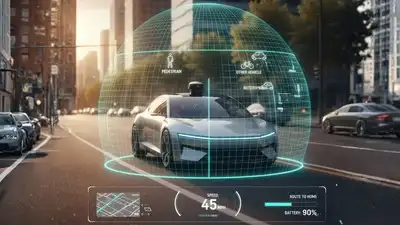
There’s a moment most drivers know—the brief blink that lasts a little too long, the yawn you try to ignore on a late-night highway. It’s human. But what happens when your car notices it before you do?
That’s where AI-based driver monitoring systems (DMS) step in, and in India, this shift feels less like science fiction and more like an inevitable next chapter.
A Subtle Shift in How We Drive
For years, car safety in India revolved around seatbelts, airbags, and maybe ABS if you were lucky. But something has changed. Roads are busier, distractions are everywhere, and fatigue is no longer just a personal issue—it’s a public safety concern.
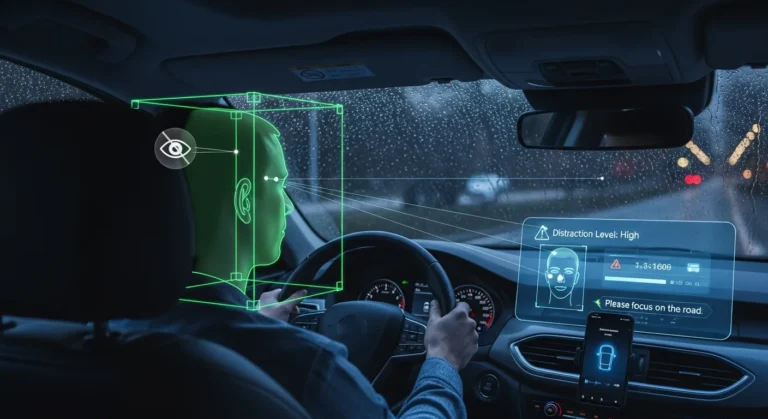
AI-based driver monitoring systems are designed to track driver behavior in real time. Cameras (usually near the steering wheel or dashboard) observe eye movement, head position, and even micro-expressions. If the system detects drowsiness, distraction, or unusual behavior, it alerts the driver.
It sounds intrusive at first, maybe even unnecessary. But then you think about long highway drives, truck drivers pulling double shifts, or even daily commuters stuck in traffic—it starts to make sense.
Why India Needs This More Than Most
India’s road conditions are unique. A mix of unpredictable traffic, varying road quality, and long-distance travel creates a perfect storm for driver fatigue and distraction.
According to government reports, a significant number of accidents in India are linked to human error—things like falling asleep at the wheel, using a phone, or simply losing focus.
This is where the real question comes in: India me AI-based driver monitoring systems ka future kya hai?
Honestly, it looks promising—and maybe even necessary.
Unlike developed markets where such systems are slowly becoming standard, India has a chance to adopt this technology with a stronger sense of urgency. Fleet operators, logistics companies, and even ride-hailing services are already exploring it.
Not Just Premium Cars Anymore
Initially, DMS was limited to luxury vehicles. Think high-end sedans or advanced SUVs where safety tech is part of the package. But that’s changing.
Automakers in India are starting to realize that safety isn’t a luxury feature—it’s a selling point. And with increasing awareness among buyers, even mid-range cars could soon include basic driver monitoring features.
Startups are also entering the space, offering retrofit solutions for commercial vehicles. A truck owner, for example, can install a DMS setup without buying a new vehicle. That’s a big deal in a country where cost sensitivity matters.
The AI Behind the Wheel (Sort Of)
What makes these systems interesting isn’t just the hardware—it’s the intelligence behind it.
AI models are trained on thousands (sometimes millions) of driving scenarios. They learn to distinguish between normal behavior and risky patterns. A quick glance at the side mirror? Fine. Looking down at your phone for too long? Not so much.
Some systems even adapt over time, understanding individual driving habits. It’s not perfect yet—false alerts can happen—but the technology is evolving fast.
And with India becoming a hub for AI development, there’s potential for local innovation tailored to Indian driving conditions.
Privacy Concerns… and Real Questions
Of course, not everyone is thrilled about being “watched” while driving.
There are valid concerns around privacy. Who owns the data? Is it stored? Can it be misused?
These questions don’t have simple answers yet. Regulations in India are still catching up with the pace of technology. But if implemented responsibly—with clear data policies and transparency—DMS can strike a balance between safety and privacy.
Still, it’s something that will shape adoption. People need to trust the system, not just tolerate it.
The Role of Government and Policy
Government intervention could accelerate things.
If safety regulations start mandating driver monitoring in commercial vehicles—like buses and trucks—it could dramatically reduce accident rates. Some discussions are already happening around advanced driver-assistance systems (ADAS), and DMS could be part of that larger framework.
In a way, it’s similar to how seatbelt laws took time but eventually became normal. The same might happen here.
A Glimpse Into the Future
Imagine this: You’re driving on a highway late at night. The road is quiet, your playlist is fading into the background, and your eyes feel heavy.
Suddenly, your car gently vibrates the steering wheel, plays a warning sound, and suggests a nearby rest stop.
That small intervention could save a life. Maybe yours. Maybe someone else’s.
That’s the real promise of AI-based driver monitoring—not control, not surveillance, but awareness.
Final Thoughts
India is at an interesting crossroads when it comes to automotive technology. On one hand, there’s rapid innovation. On the other, there’s the reality of diverse driving conditions and economic constraints.
AI-based driver monitoring systems sit right in the middle of this tension. They’re advanced, yes—but also deeply practical.
Will every car in India have it in the next few years? Probably not. But will it become a common feature, especially in commercial and long-distance vehicles? That feels almost certain.
And maybe, just maybe, the future of driving in India won’t just depend on how well you handle the wheel—but also on how well your car understands you.