What is the Best Flooring for a Badminton Court? (Complete Guide for 2026)
Choosing the right surface plays a major role in the performance, safety, and durability of any badminton court. Whether planning a professional arena, a school facility,…
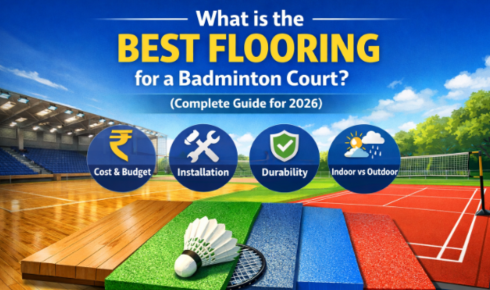
Choosing the right surface plays a major role in the performance, safety, and durability of any badminton court. Whether planning a professional arena, a school facility, or a recreational space, selecting the ideal best badminton court flooring is not just about looks,it directly affects gameplay, player comfort, and long-term maintenance costs.
This complete 2026 guide explains different surface options, cost factors, and how to select the most suitable material based on usage and environment.
Understanding Badminton Court Requirements
Before selecting a surface, it is important to understand standard badminton court measurement guidelines. A professional court measures 13.4 meters in length and 6.1 meters in width for doubles play. The flooring must support quick lateral movements, absorb shock, and provide consistent grip across the entire area.
The right surface ensures:
- Smooth shuttle movement
- Reduced injury risk
- Long-lasting performance
- Easy maintenance
Different Types of Badminton Court Surfaces
There are several badminton flooring types available in the market, each suited for different needs and budgets.
1. Wooden Flooring (Traditional Option)
Wooden courts, especially maple or teak, have been used for decades in indoor stadiums. They offer excellent shock absorption and a professional feel.
Pros:
- Premium playing experience
- Good shock absorption
- Preferred for international tournaments
Cons:
- High installation and maintenance cost
- Not suitable for outdoor use
- Sensitive to moisture and humidity
2. PVC / Vinyl Flooring
PVC mats are commonly used for indoor badminton courts, especially in academies and training centers.
Pros:
- Good grip and cushioning
- Easy to install over existing surfaces
- Suitable for indoor use
Cons:
- Limited durability compared to hard surfaces
- Can wear out faster in high-traffic areas
3. Synthetic Acrylic Surfaces
Modern courts are increasingly shifting toward synthetic badminton flooring, especially acrylic-based systems. These surfaces are applied over concrete or asphalt bases and are suitable for both indoor and outdoor courts.
Pros:
- Weather-resistant and UV-stable
- Slip-resistant surface for better grip
- Low maintenance
- Cost-effective over time
Cons:
- Requires proper base preparation
- Slightly harder compared to wooden flooring
4. Acrylic-Based Courts (Trending Choice)
An acrylic badminton court is currently one of the most preferred options in India and globally for outdoor and multipurpose facilities.
Why it’s popular:
- Durable under extreme weather conditions
- Consistent bounce and surface grip
- Ideal for schools, clubs, and public sports complexes
- Works well with multi-sport court designs
Indoor vs Outdoor Court Flooring
Indoor Courts
Indoor facilities usually prefer wooden or PVC surfaces due to better cushioning and controlled environments.
Outdoor Courts
For outdoor use, outdoor badminton court flooring must withstand heat, rain, and UV exposure. Acrylic and synthetic coatings are the most reliable options for such conditions.
Key Factors to Consider Before Choosing Flooring
Selecting the best badminton court surface depends on multiple practical factors:
1. Usage Type
- Professional tournaments → Wooden or premium synthetic
- Training & academies → PVC or acrylic
- Recreational courts → Acrylic or concrete-based coatings
2. Budget Planning
The badminton court cost varies depending on materials, base preparation, and installation.
- Wooden courts → High investment
- PVC flooring → Moderate cost
- Acrylic systems → Cost-effective long-term solution
3. Durability & Maintenance
Surfaces that require less maintenance are more suitable for schools and public areas. Synthetic and acrylic options stand out due to their long lifespan and minimal upkeep.
4. Safety & Player Comfort
Good sports surfaces must:
- Reduce impact on joints
- Provide anti-slip properties
- Allow quick directional movement
High-quality sports flooring materials are designed specifically to meet these performance standards.
Badminton Court Construction Process
Proper badminton court construction ensures the surface performs well for years. The process typically includes:
- Base preparation (concrete or asphalt)
- Surface leveling and curing
- Application of primer and coatings
- Acrylic or synthetic layer installation
- Line marking according to official dimensions
A strong foundation is essential for durability, especially for outdoor courts.
Cost Breakdown (India 2026 Estimate)
The total badminton court cost depends on size, materials, and location. Here’s a general idea:
- Basic acrylic court: ₹3–6 lakh
- PVC indoor court: ₹5–10 lakh
- Wooden professional court: ₹15 lakh+
Maintenance costs are lowest for acrylic systems, making them a preferred long-term investment.
Why Synthetic Acrylic Flooring is the Best Choice in 2026
Among all available options, synthetic acrylic surfaces are emerging as the most practical and balanced solution.
Key advantages:
- Suitable for both indoor and outdoor courts
- Excellent durability in Indian climate conditions
- Lower maintenance compared to wood or PVC
- Cost-efficient for long-term use
- Provides consistent playing performance
This makes acrylic systems the go-to choice for modern badminton facilities.
Final Recommendation
So, what is the best flooring for a badminton court?
- For professional indoor arenas → Wooden or PVC flooring
- For academies and training centers → PVC or synthetic surfaces
- For outdoor and multipurpose courts → Acrylic-based systems
In 2026, the ideal solution for most projects is synthetic badminton flooring, especially acrylic coatings, due to their durability, affordability, and versatility.
Conclusion
Selecting the right badminton court surface is a long-term investment that affects performance, safety, and maintenance. With multiple badminton flooring types available, the decision should be based on usage, budget, and environmental conditions.
Modern facilities are increasingly adopting acrylic and synthetic systems for their reliability and cost efficiency. With proper planning and professional installation, a high-quality badminton court can deliver excellent performance for years to come.